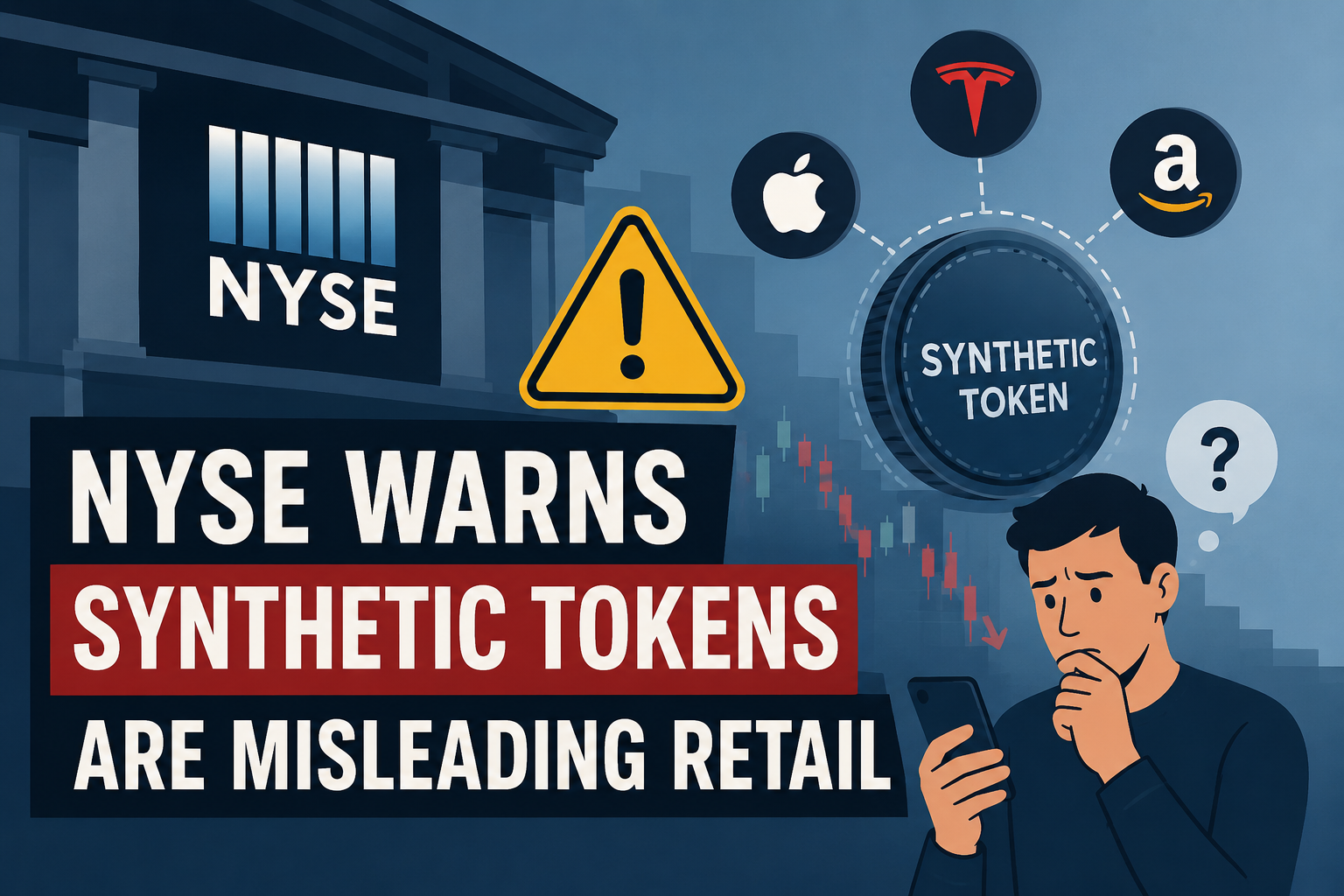
The rapid rise of blockchain technology has transformed modern finance. Over the last few years, digital assets have evolved from speculative cryptocurrencies into more advanced financial instruments. Among these innovations, synthetic tokens have become one of the most debated topics in global markets. Recently, the New York Stock Exchange raised concerns that synthetic tokens may mislead retail investors who often assume these assets provide the same protections and ownership rights as traditional stocks.
The warning has sparked intense discussion across the financial industry. Many investors now wonder whether synthetic tokens truly represent real assets or simply mimic their price movements. At the same time, regulators fear that inexperienced traders may misunderstand the risks attached to tokenized products. Consequently, the debate has become more urgent as crypto exchanges and blockchain platforms continue launching token-based versions of popular equities.
The concern is not only about technology. Instead, it centers on transparency, investor protection, and market stability. Traditional financial institutions operate under strict disclosure rules. However, many blockchain platforms still function in fragmented regulatory environments. As a result, retail investors may enter highly volatile markets without fully understanding how synthetic tokens work.
In this article, we will explore why the NYSE warns synthetic tokens are misleading retail investors, how these digital assets operate, what risks they carry, and how regulators may shape the future of tokenized finance. We will also examine the growing intersection between crypto markets and traditional stock exchanges while analyzing the broader implications for investors worldwide.
What Are Synthetic Tokens?
Synthetic tokens are blockchain-based assets designed to replicate the value of another asset. These assets may include stocks, commodities, fiat currencies, indexes, or even other cryptocurrencies. Instead of representing direct ownership, synthetic tokens usually track price movements through smart contracts and derivatives mechanisms.
For example, a synthetic token linked to a major technology stock may rise or fall according to the stock’s market value. However, the holder often does not own actual company shares. This distinction is extremely important because many retail traders mistakenly believe they receive shareholder rights such as dividends, voting power, or legal protections.
The popularity of synthetic assets has grown because they allow global access to markets without traditional brokerage systems. Additionally, they operate around the clock on decentralized platforms. Therefore, investors can trade tokenized products more easily compared to conventional stock markets that follow fixed trading hours.
Nevertheless, convenience also creates confusion. Many synthetic token platforms use branding and marketing language that resembles traditional investing products. Consequently, retail investors may struggle to identify whether they own real securities or merely blockchain representations tied to external price feeds.
Why the NYSE Is Concerned About Synthetic Tokens
The New York Stock Exchange believes synthetic tokens blur the line between regulated securities and speculative crypto products. According to market observers, the exchange worries that retail investors may not understand the structural differences between tokenized assets and genuine stock ownership.
One major concern involves disclosure standards. Traditional publicly traded companies must provide financial reports, risk statements, and regulatory filings. In contrast, synthetic token issuers may not follow the same compliance requirements. Therefore, investors could face information gaps that increase financial risk.
Another issue relates to custody and settlement. Conventional stock ownership is backed by established clearing systems and investor protections. However, blockchain-based synthetic assets rely on smart contracts, liquidity providers, and decentralized infrastructure. If technical failures occur, investors may struggle to recover funds.
Moreover, the NYSE fears synthetic tokens could undermine trust in capital markets. If retail traders suffer major losses due to misunderstood products, confidence in both crypto and traditional investing ecosystems may decline. Consequently, regulators and exchanges are paying closer attention to how tokenized assets are marketed to the public.
The warning also reflects broader industry anxiety about the merging of decentralized finance and conventional securities trading. As crypto firms attempt to tokenize stocks and ETFs, financial authorities increasingly question whether current laws can adequately protect investors.
How Synthetic Tokens Differ From Traditional Stocks
Although synthetic tokens may resemble stocks, they operate very differently behind the scenes. Understanding these distinctions is essential for any investor entering the digital asset market.
Ownership Rights and Legal Protections
Traditional stocks represent actual ownership in a company. Shareholders may receive dividends, voting rights, and legal protections under securities laws. Conversely, synthetic tokens generally do not grant these benefits because they merely track price performance.
This difference creates confusion for inexperienced investors. Many assume tokenized equities function exactly like real shares. However, synthetic products often depend on derivative contracts rather than direct corporate ownership.
Regulation and Compliance
Stock exchanges such as the NYSE operate within highly regulated environments. Brokerage firms, clearinghouses, and listed companies must comply with strict financial standards. Meanwhile, many synthetic token platforms operate globally with varying levels of oversight.
As a result, investor protections may differ significantly. Some jurisdictions lack clear rules governing tokenized securities. Therefore, disputes involving synthetic assets can become legally complicated.
Trading Infrastructure
Traditional markets use centralized systems for settlement and recordkeeping. Synthetic tokens, on the other hand, rely on blockchain technology and smart contracts. While blockchain can improve efficiency, it also introduces technical risks such as coding vulnerabilities and oracle failures.
Furthermore, decentralized systems may expose investors to hacking incidents or liquidity shortages. These risks rarely exist in conventional equity markets at the same scale.
The Growing Popularity of Tokenized Assets
Despite regulatory concerns, tokenized finance continues to expand rapidly. Investors are increasingly attracted to the speed, accessibility, and flexibility offered by blockchain-based markets.
One key driver is global accessibility. Traditional brokerage services often remain limited in certain regions. However, synthetic tokens allow users to gain exposure to foreign markets using only a crypto wallet and internet connection.
Another factor involves fractional ownership. Many tokenized platforms enable investors to buy small portions of expensive assets. Consequently, retail traders can access markets that previously required significant capital.
Additionally, decentralized finance platforms offer 24/7 trading opportunities. Unlike conventional stock exchanges, blockchain markets never close. This continuous availability appeals to younger investors accustomed to digital-first financial services.
At the same time, speculative interest has fueled demand for synthetic assets. Many traders seek fast exposure to popular stocks without opening regulated brokerage accounts. However, this convenience sometimes comes at the cost of transparency and investor protection.
Risks Facing Retail Investors
Retail investors face several important risks when dealing with synthetic tokens. Although these products may appear innovative and profitable, they can also expose users to hidden dangers.
Market Volatility
Synthetic tokens often experience sharp price swings due to crypto market volatility. Since many platforms use leverage and derivatives structures, losses can escalate quickly. Consequently, inexperienced traders may suffer significant financial damage within short periods.
Smart Contract Vulnerabilities
Blockchain-based systems rely heavily on smart contracts. If coding flaws exist, hackers may exploit vulnerabilities and drain platform funds. Several decentralized finance projects have already experienced multimillion-dollar security breaches.
Retail investors often underestimate these technical risks. Unlike traditional banks, decentralized platforms usually lack deposit insurance or guaranteed recovery mechanisms.
Liquidity Problems
Some synthetic token markets suffer from low liquidity. Therefore, investors may struggle to exit positions during periods of heavy volatility. Large price gaps and slippage can create unexpected losses, especially during market crashes.
Regulatory Uncertainty
Regulatory frameworks for synthetic assets remain unclear in many countries. Governments may introduce new laws restricting or banning certain tokenized products. Consequently, investors face uncertainty regarding future market access and legal protections.
The Role of Decentralized Finance in Synthetic Assets
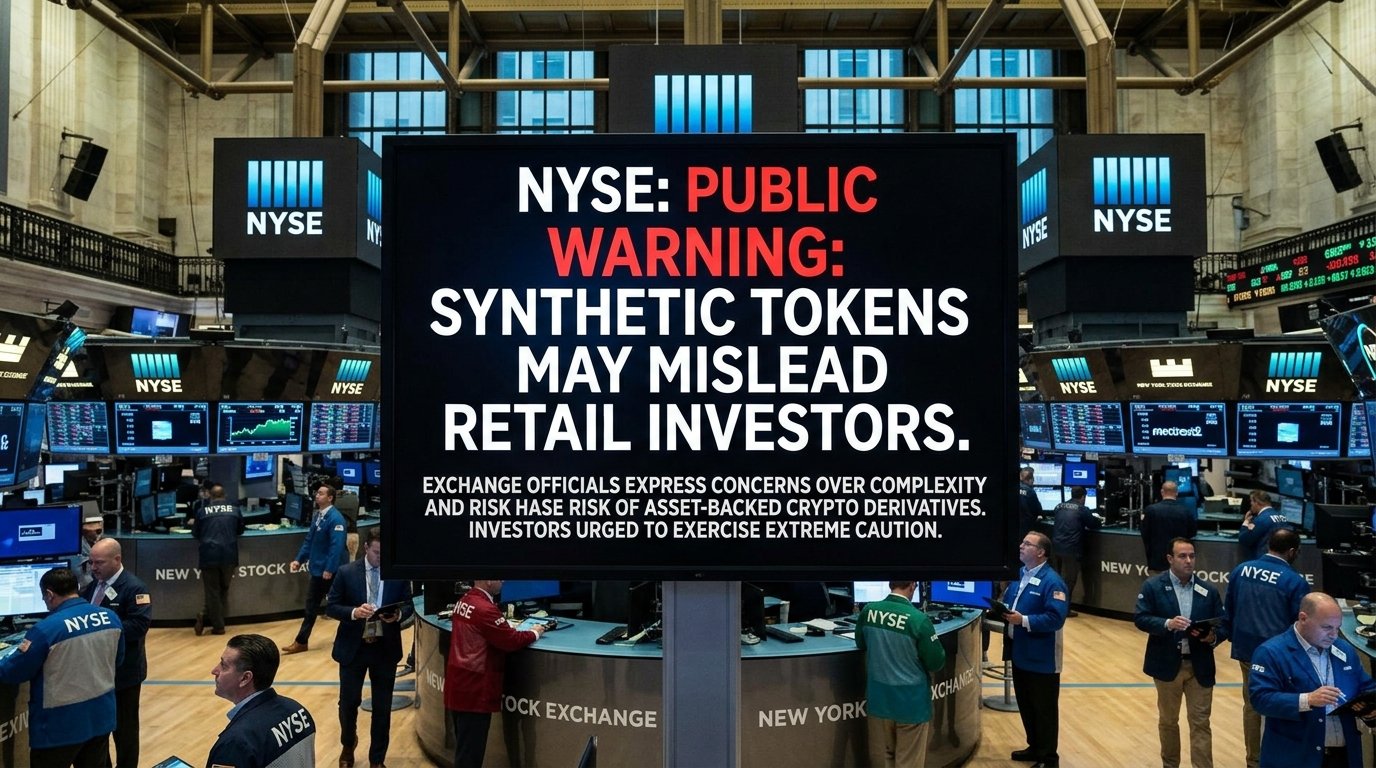
Decentralized finance, often called DeFi, has played a major role in expanding synthetic token adoption. DeFi platforms use blockchain protocols to recreate traditional financial services without centralized intermediaries.
Synthetic assets fit naturally within this ecosystem because they enable blockchain users to gain exposure to external markets. Through smart contracts, DeFi platforms can create digital representations of stocks, commodities, and indexes.
However, decentralized finance also introduces governance challenges. Many DeFi projects operate without clear accountability structures. Therefore, investors may struggle to identify responsible parties when problems arise.
Moreover, DeFi protocols often prioritize rapid innovation over regulatory compliance. As a result, authorities worry that unregulated financial experimentation could create systemic risks for broader markets.
The NYSE’s warning reflects these concerns. Traditional institutions fear that retail investors may become trapped between complex blockchain systems and insufficient regulatory safeguards.
Could Synthetic Tokens Change Wall Street?
The emergence of synthetic tokens raises an important question: could blockchain technology fundamentally reshape traditional financial markets?
Supporters believe tokenization could improve efficiency, reduce trading costs, and expand financial access worldwide. Blockchain settlement systems may also speed up transactions while reducing administrative overhead.
Additionally, tokenized assets could enable programmable finance features. Smart contracts may automate dividends, collateral management, and portfolio rebalancing. Consequently, some analysts see tokenization as the next evolution of digital finance.
However, critics argue that synthetic tokens currently lack the trust and stability required for mainstream adoption. Traditional exchanges operate under decades of regulatory development and investor protection frameworks. Replacing those systems will not happen quickly.
The most likely outcome may involve hybrid financial models. Established exchanges could integrate blockchain infrastructure while maintaining regulatory oversight. Several financial institutions are already exploring tokenization strategies that comply with securities laws.
Regulatory Pressure Is Increasing Worldwide
Governments and regulators across the world are paying closer attention to synthetic assets. Financial authorities increasingly believe that tokenized products should follow rules similar to traditional securities.
In the United States, regulators continue debating how crypto-related financial products should be classified. Some officials argue that many synthetic tokens resemble unregistered securities. Therefore, issuers may face enforcement actions if they fail to comply with existing laws.
European regulators are also developing frameworks aimed at improving transparency and investor protection in digital asset markets. Meanwhile, Asian financial hubs are exploring balanced approaches that encourage innovation while limiting systemic risk.
The regulatory response will likely shape the future of tokenized finance. Clear rules could increase institutional confidence and encourage responsible innovation. On the other hand, overly restrictive policies might push crypto activity toward less regulated jurisdictions.
For retail investors, regulation may ultimately provide stronger protections. However, compliance requirements could also reduce the speed and openness that currently define decentralized finance ecosystems.
Investor Education Has Become Essential
The NYSE’s warning highlights a broader issue in modern finance: investor education. Many retail traders enter crypto markets without fully understanding the products they buy.
Social media hype, influencer marketing, and fear of missing out often drive investment decisions. Consequently, investors may focus on short-term gains while ignoring structural risks.
Education is especially important for synthetic tokens because these assets combine elements of derivatives, blockchain technology, and speculative trading. Without proper knowledge, investors may confuse price exposure with actual ownership rights.
Financial literacy programs could help reduce confusion surrounding tokenized products. Exchanges, regulators, and blockchain platforms all have a role to play in improving transparency and communication.
Moreover, platforms should clearly explain how synthetic tokens function. Investors deserve accurate information regarding custody, legal protections, counterparty risks, and settlement mechanisms.
The Future of Synthetic Tokens
The future of synthetic tokens remains uncertain yet promising. Blockchain innovation continues moving rapidly, and demand for tokenized financial products shows little sign of slowing down.
Some experts believe regulated tokenization could eventually become a standard part of global finance. In this scenario, blockchain infrastructure would coexist with traditional exchanges under clear legal frameworks.
Others remain skeptical. They argue that synthetic assets may continue facing trust issues unless stronger investor protections emerge. Market volatility, security breaches, and regulatory conflicts could slow adoption significantly.
Nevertheless, the conversation surrounding tokenized finance is far from over. Major exchanges, banks, fintech firms, and crypto companies are all exploring how blockchain technology might reshape investing.
The NYSE’s warning does not necessarily signal opposition to innovation. Instead, it reflects growing concern that financial modernization must occur responsibly. Investor protection, transparency, and market integrity remain critical priorities as digital finance evolves.
Conclusion
The debate surrounding synthetic tokens represents a major turning point for global finance. As blockchain technology expands into traditional investing markets, regulators and financial institutions face difficult questions about transparency, investor protection, and market stability.
The New York Stock Exchange warns synthetic tokens are misleading retail investors because many traders may not fully understand the difference between price exposure and actual ownership. While tokenized assets offer exciting opportunities for accessibility and innovation, they also introduce substantial risks related to volatility, regulation, liquidity, and smart contract security.
At the same time, synthetic tokens demonstrate how rapidly financial technology is evolving. Investors increasingly seek flexible and decentralized alternatives to traditional brokerage systems. Consequently, the financial industry must find ways to balance innovation with accountability.
Moving forward, education and regulation will play crucial roles in shaping the future of tokenized finance. Retail investors should approach synthetic assets carefully, conduct thorough research, and understand the underlying structures before investing. As the line between crypto and conventional finance continues to blur, informed decision-making will become more important than ever.
FAQs
Q. What are synthetic tokens in crypto?
Synthetic tokens are blockchain-based assets that replicate the price of real-world assets like stocks, commodities, or currencies without providing direct ownership.
Q. Why did the NYSE warn about synthetic tokens?
The NYSE warned that synthetic tokens may confuse retail investors who mistakenly believe they own real securities with legal protections and shareholder rights.
Q. Are synthetic tokens legal?
The legality of synthetic tokens depends on local regulations. Some jurisdictions allow them under certain conditions, while others may classify them as unregistered securities.
Q. Do synthetic tokens provide stock ownership?
No, most synthetic tokens only track the price of an asset. They generally do not provide voting rights, dividends, or official shareholder status.
Q. Are synthetic tokens risky for beginners?
Yes, synthetic tokens can be risky due to market volatility, smart contract vulnerabilities, liquidity issues, and uncertain regulations. Beginners should research carefully before investing.